INTRODUCTION
There are diseases that a physician may encounter only a handful of times throughout their entire career. Some patients spend years searching for an accurate diagnosis. Others live with conditions so rare that the number of affected individuals is simply too small to generate sufficient commercial incentives for conventional pharmaceutical research and development.
This is one of the reasons why the concept of orphan drugs emerged.
Behind this somewhat poignant term lies a remarkable story in pharmaceutical science: How can a medicine be developed when the patient population is extremely small, research costs are enormous, and commercial profitability alone is insufficient to justify the investment?
1. WHAT IS A RARE DISEASE?
Around the world, there are diseases so uncommon that their names rarely appear in mainstream media or even in medical classrooms.
The definition of a rare disease varies across regions. In the European Union (EU), a disease is classified as rare when it affects no more than 5 in 10,000 people. In the United States, the threshold is fewer than 200,000 affected individuals across the entire population at any given time.
Although the prevalence of each individual disease is extremely low, there are more than 7,000 distinct rare diseases worldwide. Collectively, an estimated 5.9% of the global population lives with a rare disease.
However, a particularly concerning reality is that approximately 95% of rare diseases still have no approved treatment.

Figure 1. The zebra-striped ribbon: an international symbol of rare diseases.
2. WHAT ARE ORPHAN DRUGS?
Because pharmaceutical companies have historically overlooked these conditions due to their limited commercial potential, medicines developed to treat rare diseases have been given the rather poignant but meaningful name: orphan drugs.
Orphan drugs are medicinal products intended for the diagnosis, prevention, or treatment of rare diseases. Under conventional market conditions, developing these medicines is often economically challenging because the number of potential patients is extremely small.
Consequently, government incentives and supportive regulatory policies are necessary to encourage pharmaceutical companies to invest in research, development, and commercialization.
3. WHY DOES A SMALL PATIENT POPULATION MAKE DRUG DEVELOPMENT SO DIFFICULT?
To understand why rare diseases have historically received insufficient attention, we need to consider the enormous economic and operational challenges of the pharmaceutical industry.
Developing a new medicine from laboratory research to patient access is an extremely demanding process, generally involving five major stages: drug discovery, preclinical testing (involving laboratory and animal studies), clinical trials in humans, regulatory review and approval, and post-marketing safety surveillance.
Enormous time and financial investment: The entire development process can take approximately 10–15 years and cost a pharmaceutical company more than USD 2 billion.
High failure rates: Approximately 90% of drug candidates fail during clinical development because of insufficient efficacy or unacceptable safety concerns. In the United States, only around 12% of drugs entering clinical trials ultimately receive approval from the Food and Drug Administration (FDA).
For common conditions such as diabetes and hypertension, a large patient population provides pharmaceutical companies with greater opportunities to recover their investment and generate profits.
However, for rare diseases, the extremely small number of potential patients means that investing billions of dollars in drug development may result in substantial financial losses.
4. POLICY INCENTIVES: BRINGING ORPHAN DRUGS INTO THE SPOTLIGHT
To ensure that patients with rare diseases are not left behind, governments around the world have introduced special legislation and incentive programs to encourage pharmaceutical companies to research and develop treatments for these conditions.
United States: The Orphan Drug Act, enacted in 1983, introduced several major incentives, including a 50% tax credit for eligible clinical trial expenses, regulatory assistance, and, most importantly, seven years of market exclusivity.
European Union: Regulation (EC) No. 141/2000, adopted in 2000, provides technical assistance, fee reductions, and up to 10 years of market exclusivity, potentially extended by an additional two years for medicines that meet the applicable requirements for pediatric use.
Other countries: Japan (1993) and Australia (1998) also introduced similar policies to support the development of treatments for rare diseases.
Market exclusivity is one of the most important incentives. By limiting the approval of competing medicines for the same orphan indication during the designated exclusivity period, these policies provide pharmaceutical companies with valuable tim e to recover their research and development investments.
In Vietnam, the Ministry of Health has also issued a List of Rare Medicines under Circular No. 26/2019/TT-BYT. This framework establishes preferential mechanisms for marketing authorization, import licensing, and consideration for inclusion in the health insurance reimbursement list, helping improve domestic patients' access to advanced therapeutic options.
5. WELL-KNOWN ORPHAN DRUGS AND THEIR LIFE-CHANGING IMPACT ON PATIENTS
Thanks to these supportive policies, hundreds of orphan medicines have successfully received regulatory approval.
According to the European Medicines Agency (EMA), by 2026, more than 275 orphan medicines had been authorized in the European Union (EU).
These include treatments for rare cancers, immune system disorders, and inherited genetic diseases, as well as advanced therapeutic approaches such as gene therapy.
The following medicines illustrate remarkable achievements in modern medicine that have transformed the lives of many patients:
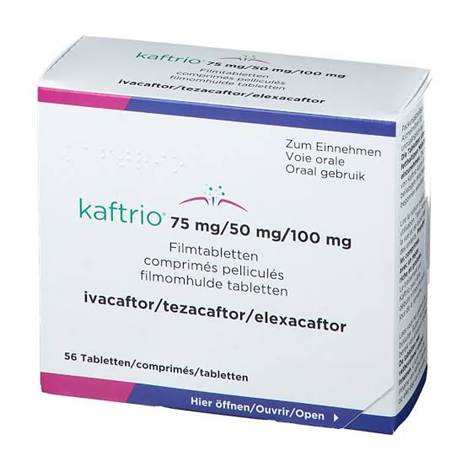
Kaftrio (elexacaftor/tezacaftor/ivacaftor): A combination of CFTR modulators used to treat cystic fibrosis, a rare inherited disorder with an estimated prevalence of approximately 1 in 9,000 people in Europe. The disease is caused by mutations in the CFTR gene, which disrupt chloride channel function in epithelial cells. This results in the production of abnormally thick and sticky secretions, severely affecting the respiratory and digestive systems.
Spinraza (nusinersen): Approved by the US FDA in 2016, Spinraza is used to treat 5q spinal muscular atrophy (5q SMA), a rare inherited neuromuscular disorder caused by mutations in the SMN1 gene. These mutations result in insufficient survival motor neuron (SMN) protein, leading to the degeneration of motor neurons.
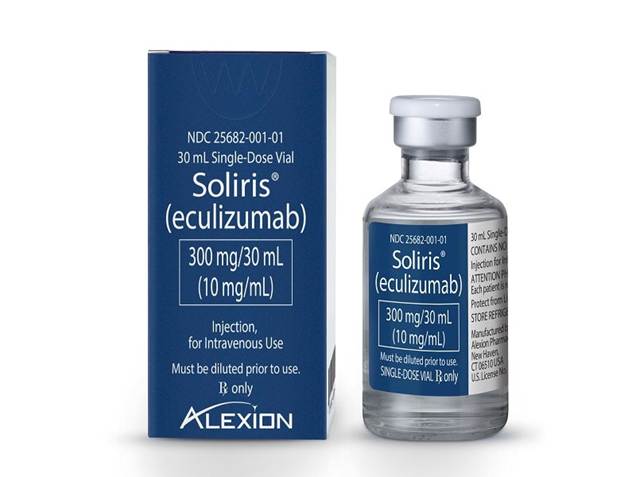
Soliris (eculizumab): Approved by the US FDA in 2007, Soliris is used to treat paroxysmal nocturnal hemoglobinuria (PNH), a rare hematological disorder caused by acquired mutations in hematopoietic stem cells. These mutations result in a deficiency of proteins that normally protect blood cells from complement-mediated destruction.

6. WHY ARE ORPHAN DRUGS OFTEN SO EXPENSIVE?
Despite their significant humanitarian value, orphan drugs are associated with a major paradox: their exceptionally high prices.
The underlying reasons are primarily related to two factors:
Research and development costs are spread across an extremely small patient population: The price of a medicine must account for the substantial investment required throughout more than a decade of research and development. For conventional medicines, these costs can be distributed across millions of patients. For orphan drugs, however, the same enormous investment must be recovered from a very small patient population, sometimes consisting of only a few hundred individuals worldwide.
The impact of market exclusivity: Government-granted market exclusivity of seven to ten years can significantly limit direct competition. This gives pharmaceutical companies greater pricing flexibility and allows them to generate revenue to recover their investments and support further research and development.
CONCLUSION
Although approximately 95% of the more than 7,000 known rare diseases still lack an FDA-approved treatment, the growing number of orphan medicines developed and authorized in recent years represents an encouraging sign of progress.
Orphan drugs are not merely achievements of genetic and pharmaceutical science. They also embody a humanitarian principle: every life, no matter how rare the disease affecting it, deserves recognition, care, and the opportunity for treatment.
REFERENCES
[1] European Commission. Rare Diseases.
https://health.ec.europa.eu/rare-diseases-and-european-reference-networks/rare-diseases_en
Accessed: September 18, 2026.
[2] U.S. Food and Drug Administration (FDA). Orphan Drug Act Definition.
https://www.congress.gov/crs-product/IF12605
Accessed: September 18, 2026.
[3] Orphanet. Knowledge on Rare Diseases and Orphan Drugs.
https://www.orpha.net/en/other-information/about-orphan-drugs
Accessed: September 18, 2026.
[4] Nguengang Wakap, S., et al. (2020). Estimating cumulative point prevalence of rare diseases: Analysis of the Orphanet database. European Journal of Human Genetics.
[5] Pharmaceutical Research and Manufacturers of America (PhRMA). Biopharmaceutical Research & Development: The Process Behind New Medicines.
[6] Wong, C. H., Siah, K. W., & Lo, A. W. (2018). Estimation of clinical trial success rates and related parameters. Biostatistics.
[7] U.S. Congress (1983). Orphan Drug Act of 1983 (Public Law 97-414).
[8] European Parliament and Council (2000). Regulation (EC) No. 141/2000 on Orphan Medicinal Products.
[9] Ministry of Health of Vietnam (2019). Circular No. 26/2019/TT-BYT: Regulations on the List of Rare Medicines. Government of Vietnam Official Portal.
https://chinhphu.vn/default.aspx?pageid=27160&docid=197963
Accessed: Sep tember 18, 2026.
[10] European Medicines Agency (EMA). Kaftrio (elexacaftor/tezacaftor/ivacaftor) – Summary of Product Characteristics.
[11] European Medicines Agency (EMA). Orphan Medicines in the EU.
https://www.ema.europa.eu/en/documents/leaflet/infographic-orphan-medicines-eu_en.pdf
Accessed: September 18, 2026.
[12] Orphanet. Cystic Fibrosis.
https://www.orpha.net/en/disease/detail/586
Accessed: September 18, 2026.
[13] U.S. Food and Drug Administration (FDA) (2016). FDA Approves Spinraza (nusinersen) for Spinal Muscular Atrophy.
[14] Alexion Pharmaceuticals, Inc. Soliris (eculizumab) Prescribing Information.
Authors:
MSc. Nguyễn Xuân Tú
MSc. Nguyễn Yên Hà
Publication date: November 3, 2026

