Mupirocin is a topical antibiotic that acts primarily against Gram-positive bacteria, particularly Staphylococcus aureus and Streptococcus pyogenes. It inhibits the enzyme isoleucyl-tRNA synthetase, thereby disrupting bacterial protein synthesis. Mupirocin is commonly used to treat localized skin infections and, in certain cases, to eradicate nasal S. aureus colonization. Its inappropriate or excessive use should be avoided to minimize the development of antimicrobial resistance.
1. GENERAL OVERVIEW
Mupirocin is a topical antibiotic originally isolated from the bacterium Pseudomonas fluorescens in 1971. It was subsequently introduced into clinical practice in 1985.
Chemical Structure
Mupirocin is a mixture of several pseudomonic acids, designated A through D. Among these, pseudomonic acid A accounts for more than 90% of the mixture.
Structurally, pseudomonic acid A consists of two main components:
Monic acid, containing 17 carbon atoms.
9-Hydroxynonanoic acid, containing 9 carbon atoms.
These two components are connected through an ester linkage, forming the characteristic structure of mupirocin.
In addition to pseudomonic acid A, mupirocin contains other pseudomonic acids:
Pseudomonic acid B: Structurally similar to pseudomonic acid A but with an additional hydroxyl group at the C8 position.
Pseudomonic acid C: Contains a double bond at positions C10–C11 instead of the epoxide ring.
Pseudomonic acid D: Contains an additional double bond at positions C4–C5 and is present in very small amounts in the mixture.
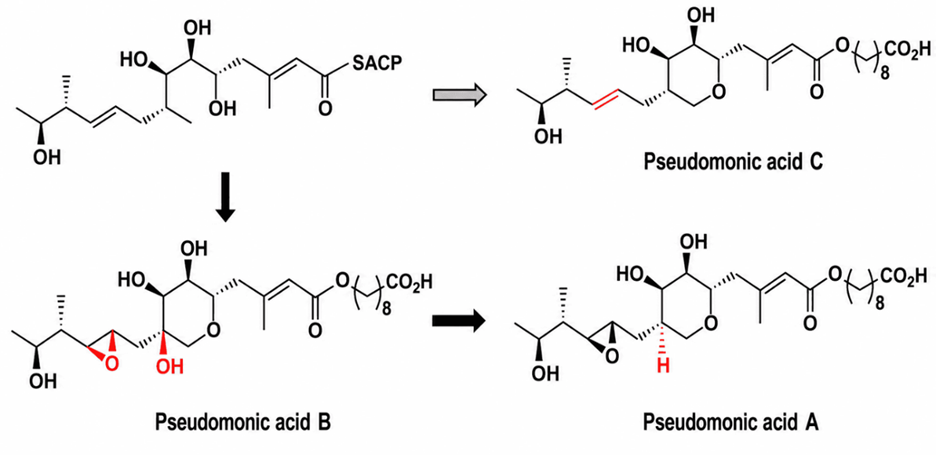
Figure 1. Chemical structures of mupirocin and its major pseudomonic acid components.
2. MECHANISM OF ACTION
Mupirocin exerts its antibacterial activity primarily by inhibiting bacterial protein synthesis.
Inhibition of Protein Synthesis
Mupirocin binds specifically and reversibly to the enzyme isoleucyl-tRNA synthetase (IleRS).
Because of its structural similarity to isoleucine, mupirocin competitively binds to the enzyme's active site, disrupting the attachment of isoleucine to its corresponding transfer RNA (tRNA).
As a result, bacteria become depleted of the isoleucyl-tRNA required for protein synthesis, thereby inhibiting bacterial growth and survival.
This amino acid deficiency also increases the accumulation of uncharged tRNA molecules, triggering the RelA/(p)ppGpp-mediated stringent response. This response subsequently suppresses RNA synthesis and other bacterial metabolic activities.
Concentration- and pH-Dependent Activity
At low concentrations, mupirocin primarily exhibits bacteriostatic activity, whereas at higher concentrations, it may exert bactericidal effects.
Its antibacterial activity increases under acidic conditions, which are consistent with the naturally acidic environment of the skin.
Mupirocin has very low affinity for the corresponding enzyme in human cells, contributing to its high selectivity and low toxicity when used topically.
Potential Role in Wound Healing
Some studies suggest that mupirocin may contribute to epithelial regeneration and keratinocyte proliferation. It may also influence inflammatory mediators, including tumor necrosis factor-alpha (TNF-α).
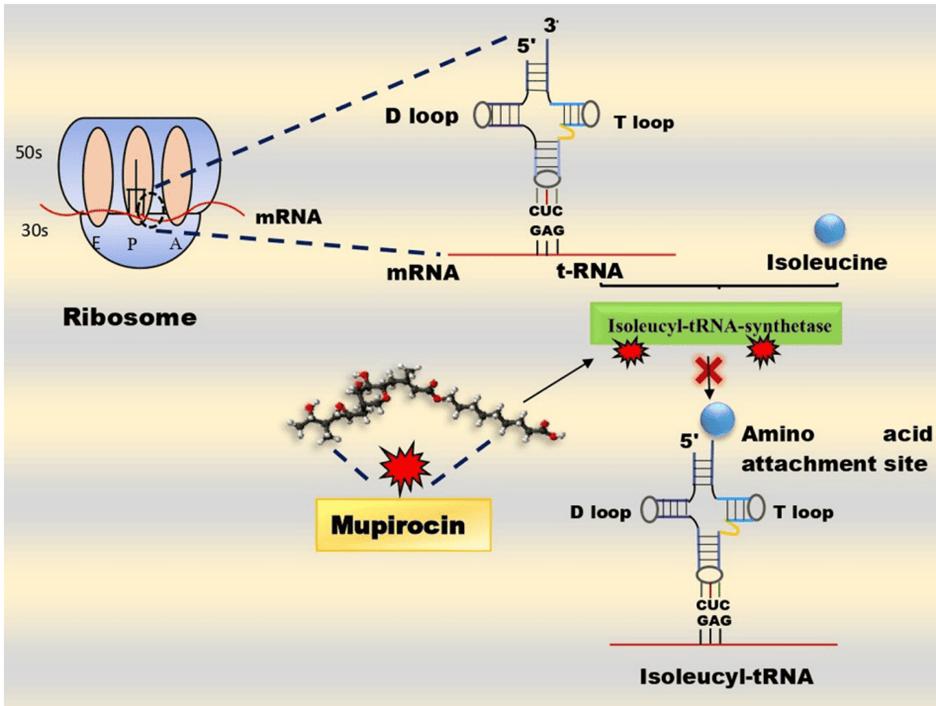
Figure 2. Mechanism of action of mupirocin.
Mechanisms of Bacterial Resistance to Mupirocin
Mupirocin resistance is generally classified into two main categories: low-level resistance and high-level resistance.
Low-Level Resistance
Low-level resistance is primarily associated with mutations in the chromosomal ileS gene, which encodes IleRS, the target enzyme of mupirocin.
These mutations alter the drug-binding site of the enzyme, reducing mupirocin affinity and consequently decreasing its inhibitory activity.
Several mutations have been identified, including V588F, V631F, G593V, R816C, H67Q, and F563L, with V588F being among the commonly reported mutations.
Because these mutations are located on the bacterial chromosome, this form of resistance generally arises through spontaneous bacterial mutations and has a lower potential for horizontal transmission.
High-Level Resistance
High-level resistance is of particular concern because it is commonly associated with resistance genes located on plasmids, allowing them to spread between bacteria.
The most important gene is mupA (ileS2), which encodes an alternative form of IleRS with very low affinity for mupirocin. This enables bacteria to continue synthesizing proteins even in the presence of the antibiotic.
Another resistance gene, mupB, also encodes an alternative IleRS enzyme and can confer high-level resistance.
These genes may be carried on plasmids containing multiple antimicrobial resistance genes. In addition, mobile genetic elements such as IS256 and IS257 may contribute to the dissemination or regulation of resistance genes.
3. ANTIBACTERIAL SPECTRUM
Mupirocin exhibits antibacterial activity primarily against Gram-positive bacteria, particularly pathogens commonly associ ated with skin and soft tissue infections.
Its activity against Gram-negative bacteria is limited, although it may be active against certain organisms, including Haemophilus influenzae and Neisseria gonorrhoeae.
Gram-Positive Bacteria
Mupirocin is active against several Staphylococcus species, particularly Staphylococcus aureus and Staphylococcus epidermidis.
It may be effective against both methicillin-susceptible S. aureus (MSSA) and many methicillin-resistant S. aureus (MRSA) strains.
The drug is also active against certain Streptococcus species, including Streptococcus pyogenes, a common causative pathogen of skin infections such as impetigo.
Effects on the Normal Skin Microbiota
Mupirocin exhibits relatively limited activity against certain commensal skin bacteria, including Corynebacterium, Micrococcus, and Cutibacterium (formerly known as Propionibacterium).
Therefore, when used appropriately for its indicated purposes, mupirocin may exert a more targeted effect against susceptible pathogenic bacteria while having a relatively limited impact on certain components of the normal skin microbiota.
4. PHARMACOKINETICS
Mupirocin is primarily used topically because it is poorly absorbed through the skin and rapidly loses its activity after entering the systemic circulation.
Absorption
Mupirocin penetrates the outer layers of the skin, while systemic absorption through intact skin is minimal.
When applied to healthy skin, negligible amounts of mupirocin are absorbed into the systemic circulation. However, absorption may increase when the drug is applied to damaged skin, open wounds, or large body surface areas.
Some mupirocin ointment formulations contain polyethylene glycol (PEG) as an excipient. PEG may be absorbed to a greater extent through damaged skin and subsequently eliminated by the kidneys. Therefore, caution is required when large quantities are applied over extensive areas in patients with impaired renal function.
Distribution
Mupirocin entering the systemic circulation exhibits a high degree of plasma protein binding, with protein binding reported to exceed 97%.
However, because dermal absorption is minimal, systemic plasma concentrations following conventional topical application are generally negligible.
Metabolism
Following systemic absorption, mupirocin is rapidly metabolized into monic acid, an inactive metabolite. This metabolic conversion occurs after intravenous administration or oral exposure.
Elimination
Mupirocin has a very short elimination half-life of less than 30 minutes.
Its inactive metabolite, monic acid, is subsequently eliminated primarily through the kidneys.
5. THERAPEUTIC INDICATIONS
Mupirocin is primarily administered as a topical preparation, particularly for skin infections caused by susceptible Staphylococcus and Streptococcus species.
The dosage and duration of treatment depend on the type of lesion and the severity of the infection.
Impetigo
Mupirocin may be used for the topical treatment of localized impetigo lesions
The medication is generally applied directly to the affected skin twice daily, in the morning and evening, for approximately seven days.
Folliculitis
For superficial bacterial folliculitis, mupirocin 2% may be applied directly to the affected area.
The usual application frequency is three times daily after cleansing the affected skin, with a treatment duration of approximately 7–10 days.
Nasal Vestibulitis (Off-Label Use)
Intranasal administration – ointment:
Apply the ointment inside the affected nostril twice daily for five days.
References: UpToDate, Vietnam National Drug Formulary, and electronic Medicines Compendium (eMC).
Secondary Skin Infections
Mupirocin may be used for localized secondary bacterial infections, including infected wounds, ulcers, impetiginized scabies, and secondary bacterial infections associated with herpes simplex lesions.
Topical administration – cream or ointment:
Apply to the affected area 2–3 times daily, generally for 7–10 days, depending on infection severity and clinical response.
If there is no improvement after 3–5 days, the treatment regimen should be reassessed.
6. ADMINISTRATION
Intranasal Administration (Ointment – Off-Label Use)
After applying the ointment inside the nostril, gently press both sides of the nose together and massage lightly for approximately one minute to distribute the medication evenly throughout the nasal passages.
Do not use other intranasal products simultaneously.
Wash hands before and after application.
If the medication accidentally comes into contact with the eyes or the surrounding area, rinse thoroughly with water.
Topical Administration (Cream or Ointment)
For external use only. Do not apply to the eyes or mucous membranes, as the formulation may cause dryness and irritation.
Apply a small amount directly to the affected area using sterile gauze or a cotton swab. The treated area may be covered with gauze if desired.
When used to prev ent infection at the exit site of a peritoneal dialysis catheter, apply the medication only to the skin surrounding the catheter exit site. Avoid contact with the catheter itself, as the medication may damage the catheter material.
If accidental contact with the eyes or surrounding area occurs, rinse thoroughly with water.
Wash hands before and after application.
REFERENCES
Ministry of Health of Vietnam. (2023). Guidelines for the Diagnosis and Treatment of Dermatological Diseases. Issued under Decision No. 4416/QĐ-BYT dated December 6, 2023.
Prakash, Rajni, et al. (2023). Chronicity of high and low level mupirocin resistance in Staphylococcus aureus from 30 Indian hospitals. Scientific Reports, 13(1), 10171. https://doi.org/10.1038/s41598-023-37399-0
Sun, Jing, et al. (2024). Mupirocin for skin infection: Clinical experience from China. Infection and Drug Resistance, 3955–3966. https://doi.org/10.2147/IDR.S475611
Khoshnood, Saeed, et al. (2019). A review on mechanism of action, resistance, synergism, and clinical implications of mupirocin against Staphylococcus aureus. Biomedicine & Pharmacotherapy, 109, 1809–1818. https://doi.org/10.1016/j.biopha.2018.10.131
Rivera, Paola, et al. (2025). Therapeutic efficacy of 2% mupirocin in managing Staphylococcus aureus and Streptococcus pyogenes wound infections. Cureus, 17(4). https://doi.org/10.7759/cureus.82366
Gangwar, A., Kumar, P., Singh, R., & Kush, P. (2021). Recent advances in mupirocin delivery strategies for the treatment of bacterial skin and soft tissue infection. Future Pharmacology, 1, 80–103. https://doi.org/10.3390/futurepharmacol1010007
Authors:
MSc. Kim Ngoc Son
MSc. Dinh Thi Thuy Ha
Publication date: October 15, 2026

