1. GENERAL OVERVIEW
Nefopam is a centrally acting analgesic belonging to the non-opioid class of pain medications. Unlike nonsteroidal anti-inflammatory drugs (NSAIDs), it does not possess anti-inflammatory properties. It is primarily used in the management of acute and chronic pain, particularly for postoperative pain relief.
Development History
Nefopam was developed during the 1960s, initially under the name fenazocine. The compound was originally investigated for its potential antidepressant and muscle relaxant properties. In the early 1970s, it was renamed nefopam, and research subsequently shifted towards its analgesic effects.
Chemical Structure
Nefopam has the IUPAC name 5-methyl-1-phenyl-1,3,4,6-tetrahydro-2,5-benzoxazocine, with the molecular formula C₁₇H₁₉NO. It belongs to the benzoxazocine derivative class.
Its chemical structure is related to those of orphenadrine and diphenhydramine. Nefopam is administered as a racemic mixture containing two enantiomers, (+) and (−), with the (+) enantiomer exhibiting greater analgesic activity.
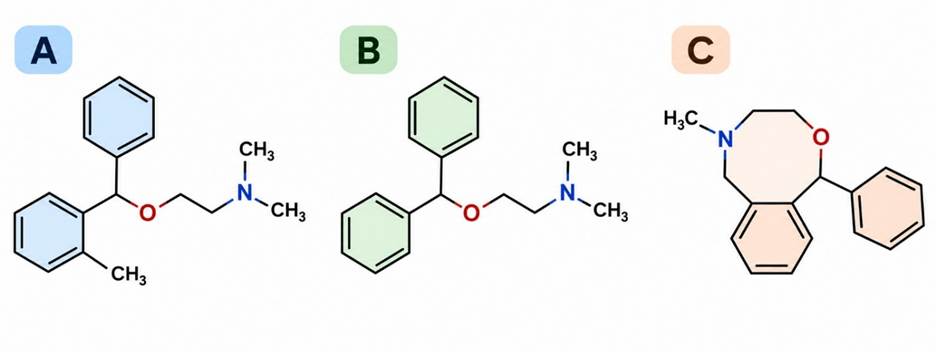
Figure 1. Structural similarities among (A) orphenadrine, (B) diphenhydramine, and (C) nefopam.
2. MECHANISM OF ACTION
Nefopam exerts its analgesic effects through dual mechanisms, acting at both spinal and supraspinal levels.
Enhancement of Descending Inhibitory Pain Pathways
Nefopam inhibits the reuptake of serotonin (5-HT), norepinephrine, and dopamine within the central nervous system. This increases the concentrations of these neurotransmitters in the synaptic cleft, thereby enhancing descending inhibitory pain pathways and reducing pain perception.
Reduction of Pain Hypersensitivity
Nefopam also acts on voltage-gated sodium channels and calcium influx into cells, thereby reducing glutamate release.
As glutamate levels decrease, activation of NMDA receptors is also reduced. This helps limit central sensitization and pain hypersensitivity, particularly in patients experiencing persistent pain.
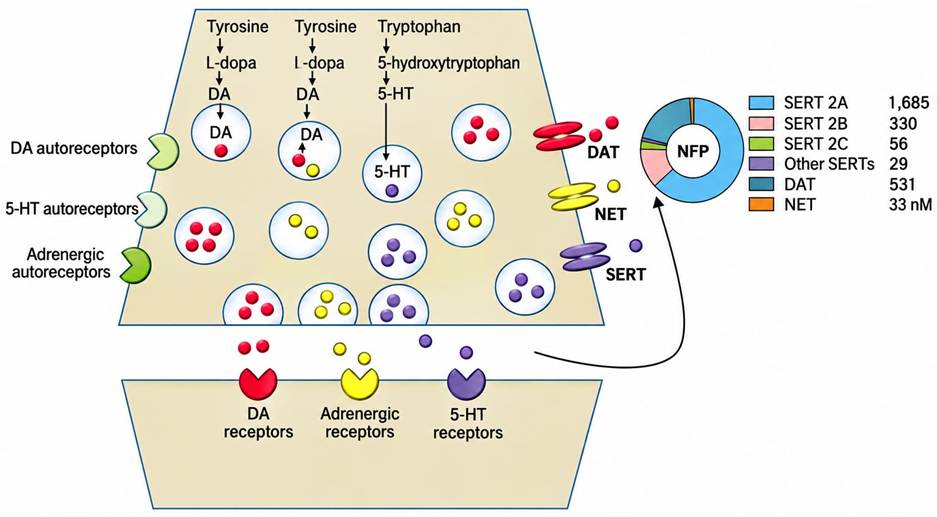
Figure 2. Nefopam (NFP) inhibits the reuptake of dopamine (DA), noradrenaline (NA), and serotonin (5-HT), thereby reducing pain perception.
Source: Kim, Kyung Hoon, and Salahadin Abdi. "Rediscovery of nefopam for the treatment of neuropathic pain." The Korean Journal of Pain 27.2 (2014): 103–111. DOI: 10.3344/kjp.2014.27.2.103.
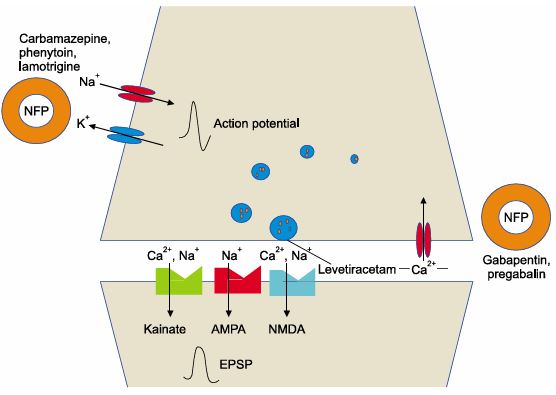
Figure 3. Mechanisms of action of nefopam (NFP) within the nervous system.
Source: Kim, Kyung Hoon, and Salahadin Abdi. "Rediscovery of nefopam for the treatment of neuropathic pain." The Korean Journal of Pain 27.2 (2014): 103–111. DOI: 10.3344/kjp.2014.27.2.103.
3. PHARMACOKINETICS
Absorption
Following intravenous administration, nefopam reaches peak plasma concentrations within approximately 15–20 minutes. During continuous intravenous infusion, peak concentrations are reached at approximately 30 minutes.
Oral bioavailability is approximately 40%, with a time to maximum plasma concentration (Tmax) of approximately 1–3 hours.
Distribution
Approximately 75% of nefopam is bound to plasma proteins following administration.
Metabolism
Nefopam is primarily metabolized in the liver through the involvement of the following enzymes:
CYP1A2
CYP2C19
CYP2D6
Its two major metabolites are desmethylnefopam and nefopam N-oxide.
Elimination
Nefopam has an elimination half-life of approximately 3–5 hours. Around 87% of the administered drug is eliminated through the kidneys.
4. THERAPEUTIC INDICATIONS
Indications
Nefopam is used for the following purposes:
Management of acute and chronic pain: Including postoperative pain and cancer-related pain. It may also be combined with other analgesics to reduce opioid requirements.
Prevention and treatment of postoperative shivering: Particularly following general anesthesia, hypothermia, or spinal anesthesia.
Management of severe or persistent hiccups: Particularly in certain mechanically ventilated patients.
Reduction of agitation during emergence from anesthesia.
Routes of Administration
Nefopam can be administered orally, intravenously (IV), or intramuscularly (IM).
In certain clinical situations, it may also be administered through continuous intravenous infusion using a syringe pump or diluted in 0.9% sodium chloride (NaCl) solution.
Intravenous administration must be performed very slowly (over at least 15 minutes) or through slow infusion to minimize the risk of complications such as hypotension or hypertension, tachycardia, severe nausea, and excessive sweating.
Dosage
Oral Administration
The usual dosage ranges from 30–90 mg three times daily, depending on the patient's response.
The recommended initial dose is 60 mg per administration, three times daily.
Parenteral Administration
The usual intramuscular dose is 20 mg per administration, which may be repeated every 4–6 hours when necessary.
For continuous intravenous infusion, the total daily dose is approximately 60–120 mg, with a maximum dose of 120 mg per 24 hours.
Dose Adjustment in Special Populations
In older adults and patients with severe renal impairment, particularly those undergoing hemodialysis, nefopam distribution and elimination may be altered, increasing the risk of drug accumulation and toxicity.
Therefore, a dose reduction of approximately 50% may be considered.
5. ADVERSE DRUG REACTIONS
Most adverse reactions associated with nefopam are mild to moderate in severity and can generally be managed.
Common Adverse Reactions
The most frequently reported adverse reactions include:
Nausea and vomiting.
Dry mouth.
Excessive sweating.
Flushing or a sensation of warmth.
Patients may also experience drowsiness, dizziness, mild headaches, or fatigue.
With parenteral administration, injection-site pain may occur, particularly when the drug is administered too rapidly.
Cardiovascular Effects
Nefopam may increase heart rate and cause palpitations or a sensation of an abnormally rapid heartbeat.
Rare Adverse Reactions
Anticholinergic effects:
These may include dry mouth and urinary retention.
Neurological and psychiatric effects:
Nefopam may cause confusion, agitation, disorientation, delirium, hallucinations, insomnia, or seizures.
Hypersensitivity reactions:
These may include itching, erythema, and urticaria.
Risks Associated with Overdose
Nefopam overdose can cause serious toxicity, including:
Altered consciousness.
Seizures
Cardiac arrhythmias.
Respiratory depression.
Cerebral edema.
Therefore, the medication must be used at the recommended dosage, with appropriate monitoring in patients at risk of overdose.
Safety Advantages
Compared with opioids and certain other analgesics, nefopam offers several potential safety advantages:
It does not cause opioid-mediated respiratory depression because it does not act on opioid receptors.
It does not produce dependence, addiction, or tolerance through the same mechanisms as opioids.
It does not cause gastric mucosal damage in the same manner as NSAIDs.
It does not significantly affect platelet function or the blood coagulation process.
Strategies to Minimize Adverse Effects
To reduce the risk of adverse reactions, particularly nausea, excessive sweating, dizziness, tachycardia, and injection-site pain, intravenous administration should be performed slowly in accordance with recommended guidelines.
Dose reduction should also be considered in older adults and patients with severe renal impairment.
Additionally, caution is advised when administering nefopam to patients with severe cardiovascular disease, glaucoma, prostatic hypertrophy, or a history of seizures.
6. CONTRAINDICATIONS
Nefopam is contraindicated in patients with a history of hypersensitivity to the drug or seizure disorders, including epilepsy.
It should not be used in patients with severe ischemic heart disease, glaucoma, prostatic hypertrophy associated with a risk of urinary retention, or those currently receiving monoamine oxidase inhibitors (MAOIs).
Furthermore, because safety data remain limited, nefopam should be avoided during pregnancy and breastfeeding, as well as in children.
7. PRECAUTIONS
Caution is required when administering nefopam to patients with severe renal impairment, older adults, and individuals with hemodynamic instability.
In patients with end-stage renal disease, altered pharmacokinetics may increase the risk of drug accumulation. Therefore, a dose reduction of approximately 50% or an adjustment to the intravenous infusion rate and duration may be necessary, depending on the patient's clinical condition.
Older adults should also be considered for dose reduction and slower infusion.
Of particular concern, nefopam may cause tachycardia, a reduction in mean arterial pressure, and decreased systemic vascular resistance.
Consequently, close monitoring of hemodynamic parameters is essential throughout treatment.
8. DRUG INTERACTIONS
Nefopam is contraindicated for concomitant use with monoamine oxidase inhibitors (MAOIs) because of the potential accumulation of neurotransmitters, which may lead to severe hypertension and neurological complications.
Caution is also necessary when nefopam is combined with tricyclic antidepressants or other centrally acting medications because of the potential for increased adverse effects.
Additionally, concomitant use of anticholinergic medications may increase the risk of dry mouth, tachycardia, and urinary retention.
In critically ill patients, one study reported no significant difference in the analgesic efficacy of nefopam between patients receiving vasopressors and those not receiving vasopressor therapy.
Nefopam is primarily metabolized in the liver, involving the CYP1A2, CYP2C19, and CYP2D6 enzyme systems.
Therefore, medications that inhibit or induce these enzymes may alter nefopam plasma concentrations and potentially affect its therapeutic response and safety profile.
REFERENCES
Aleid, Abdulsalam M., et al. (2025). A meta-analysis of efficacy a nd safety of nefopam for laparoscopic cholecystectomy pain management. Journal of Taibah University Medical Sciences, 20(2), 191–200. DOI: 10.1016/j.jtumed.2025.02.010.
Chanques, Gerald, et al. (2011). Analgesic efficacy and haemodynamic effects of nefopam in critically ill patients. British Journal of Anaesthesia, 106(3), 336–343. DOI: 10.1093/bja/aeq375.
Tiglis, Mirela, et al. (2018). Nefopam and its role in modulating acute and chronic pain. Revista de Chimie (Bucharest), 69(10), 2877–2880.
Kim, Kyung Hoon, and Salahadin Abdi. (2014). Rediscovery of nefopam for the treatment of neuropathic pain. The Korean Journal of Pain, 27(2), 103–111. DOI: 10.3344/kjp.2014.27.2.103.
Pasutharnchat, Koravee, Wichita Wichachai, and Rungrawan Buachai. (2020). Analgesic efficacy of nefopam for cancer pain: A randomized controlled study. F1000Research, 9, 378. DOI: 10.12688/f1000research.23455.1.
Authors:
MSc. Kim Ngoc Son
MSc. Do Thi Phuong Dung
Publication date: October 15, 2026

